
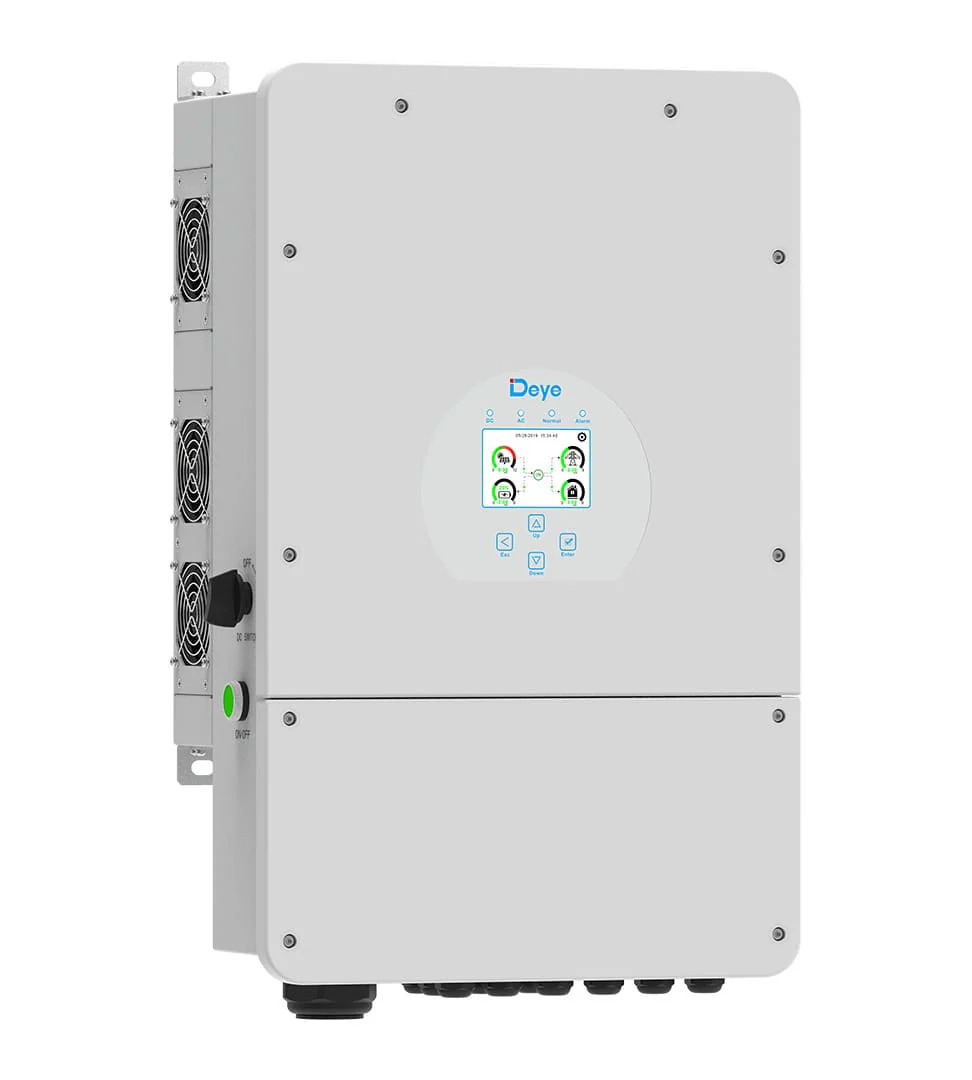
Will a Deye inverter keep power on in a blackout?
A correctly designed Deye hybrid battery system can support designated backup loads, but buying a hybrid inverter and battery does not automatically provide whole-home backup. The exact model, backup wiring, battery configuration, state of charge and connected loads determine what can run.
Normal grid-connected solar operation and outage operation are different. Your installer must provide the appropriate arrangement for supported backup circuits. Ask for a clear description of what will operate when the grid fails rather than relying on the word “hybrid”.
Choose essential circuits before choosing battery size
List the loads you need during an outage: refrigeration, selected lighting, communications and other essentials may be different from your normal whole-home demand. Large air conditioners, ovens, pumps or workshop equipment can change the required power significantly.
- What needs to run at the same time?
- Do any loads have significant starting demand?
- Which circuits will be connected to the supported backup arrangement?
- What happens if demand exceeds the backup system’s limits?
- How much stored energy should be reserved for an unexpected outage?
Give this list to your installer. Backup is an electrical design requirement, not simply a battery-capacity choice.
Single-phase and three-phase backup are not interchangeable
Our Deye range includes a 10 kW single-phase model and 10 kW or 12 kW three-phase models. Check the exact model’s backup specifications and phase requirements. A three-phase total output rating does not mean the full rating is available on one phase.
Your contractor should assess per-phase demand, starting loads and applicable imbalance limits. Grid passthrough specifications are also not a promise of equal battery-only backup power. See our Deye phase-selection comparison before selecting hardware.
How long will the battery last?
Runtime depends on usable stored energy and the actual load. For illustration, a load averaging 0.5 kW for eight hours consumes 4 kWh. That is a demand calculation—not a promise that a particular module will run those loads for eight hours.
Available capacity, reserve settings, conversion losses, battery condition and operating limits affect the outcome. Solar charging during an outage also depends on the supported design and available generation; do not assume the array will recharge the battery in all conditions.
Read the solar battery sizing article to separate kWh from kW, and confirm Deye–Pytes compatibility for the proposed stack.
Can backup be added to existing solar?
Possibly, but the existing inverter and site design must be assessed first. Adding a battery does not automatically turn an existing grid-connected solar system into an outage-capable system. Send the existing model, switchboard information requested by your installer and your backup priorities for a system-specific review.
Do not assume instant transfer, uninterrupted operation for sensitive equipment or off-grid capability from the model name. Critical medical or other essential equipment may need a dedicated solution assessed by a qualified professional.
Request a quote with backup requirements included
Send your supply phase, inverter model under consideration, battery configuration, essential load list and postcode. Daniel can discuss hardware and product questions; a qualified contractor must confirm installation and backup design. Evolve Energy Hub supplies equipment only.
- Deye SG02LP1 single-phase manual (PDF)
- Deye SG04LP3 three-phase manual (PDF)
- Queensland Government battery buyer’s guide
Use the current manual for your exact model. This article explains buying considerations, not wiring or changeover instructions.