Can a Deye hybrid inverter work with a Pytes battery?
Deye low-voltage hybrid inverters and Pytes Pi LV1 batteries are our main equipment pairing. Daniel’s advice draws on hands-on involvement in more than 130 Pi LV1 systems. However, the brand names alone do not establish compatibility for every Deye inverter, Pytes product or firmware version.
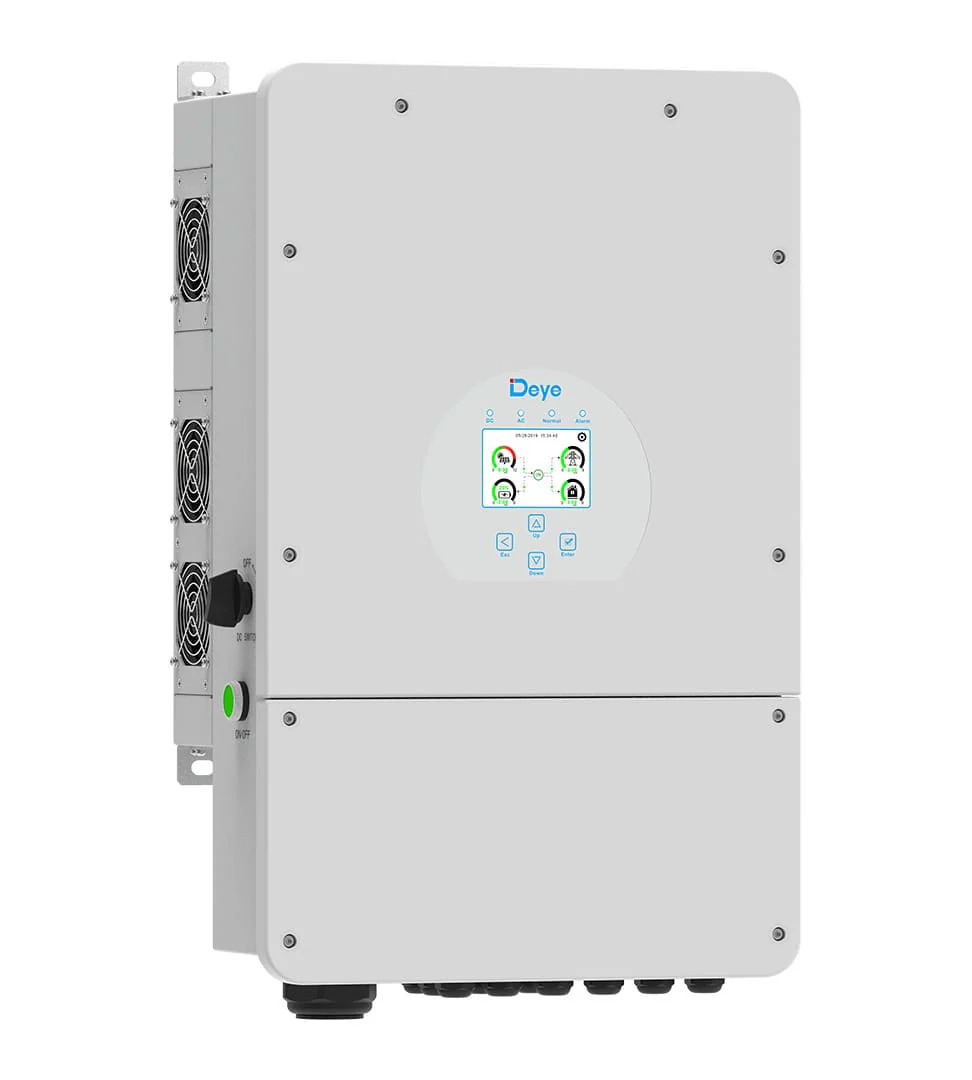
Confirm the exact inverter model and battery configuration before ordering. Our Deye range is the 10 kW single-phase SUN-10K-SG02LP1-AU-AM3 and three-phase SUN-10K-SG04LP3-AU and SUN-12K-SG04LP3-AU. Advice for these models must not be assumed to cover a different high-voltage or regional inverter family.
Matching battery voltage is only the starting point
The Pi LV1 BMU is listed at 51.2 V nominal. That figure alone does not confirm correct operation with any inverter described as “48 V”. A supported system also needs the appropriate communication arrangement, battery profile, firmware and operating limits.
Battery and inverter coordination matters: the system needs to respect battery charge/discharge limits and respond appropriately to battery information. Your installer should use the current manufacturer documents for the exact equipment rather than relying on a generic cable or copied settings.
A compatibility checklist for the quote
- Full model identifiers: include the inverter suffix and battery model, not just “Deye 10 kW” and “Pytes”.
- Configuration: specify BMU quantities, the BCU base and whether this is a new system or expansion.
- Manufacturer support: check the applicable compatibility information and installation instructions.
- Firmware and profile: confirm supported versions and the correct configuration for the pairing.
- Communications: confirm the required ports, cable arrangement and termination from the applicable instructions.
- Power limits: check battery and inverter limits together, including the intended backup loads.
Evolve can discuss the product requirements with you and your installer. Do not wire a communication cable from pin information for another product or apply a universal internet setting.
Battery capacity does not guarantee full inverter output
Adding kWh and selecting inverter kW are related but separate decisions. A battery stores energy; the battery configuration and inverter determine how much power can be supplied at a given time. A 10 kW inverter label does not guarantee that any attached battery can continuously deliver 10 kW.
Check the manufacturer’s limits for the actual stack and operating conditions. For capacity planning, read what size solar battery you need. For the hardware breakdown, see Pi LV1 BMU versus BCU.
Existing systems need their own review
If you already have solar or batteries, send the existing model numbers, module count and relevant commissioning records. Confirm expansion and integration rules before purchasing; do not assume a new battery or inverter is a drop-in replacement.
For a communication fault, provide the exact error and system details through the contact page. Avoid opening equipment or changing wiring. Electrical diagnosis and installation belong with an appropriately qualified contractor.
Documents and direct product advice
- Pytes Pi LV1 user manual (PDF)
- Deye SG02LP1 single-phase manual (PDF)
- Deye SG04LP3 three-phase manual (PDF)
- Deye Australia documentation centre
Confirm revisions for your equipment and request current compatibility information before purchase. Our hands-on pairing experience is not a substitute for an applicable manufacturer approval; this article does not certify every Deye–Pytes combination. Daniel supports product and commissioning questions for systems purchased through Evolve Energy Hub. We supply hardware only; this article is not a commissioning procedure.